Pioneer of Computational Science
Breaking Problems into Pieces: The Finite Element Revolution
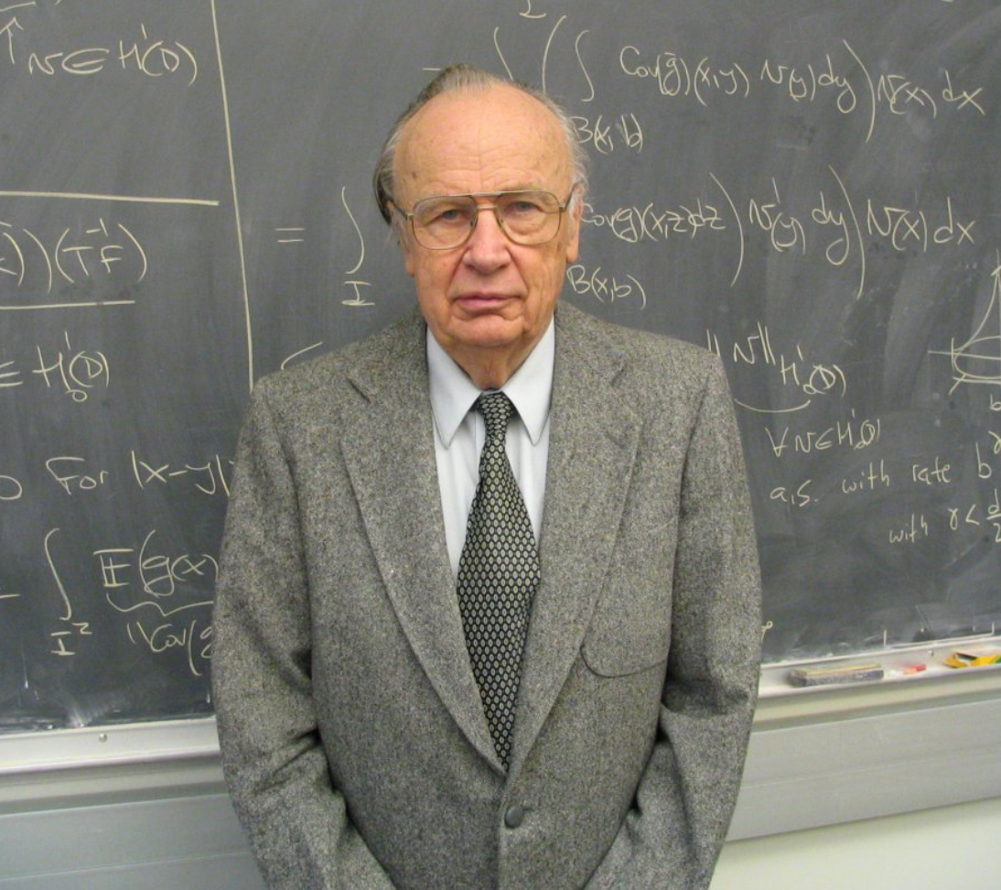
Ivo Babuška transformed science and engineering by establishing the mathematical foundations of the Finite Element Method (FEM).
Through six decades of elegant and foundational proofs, Babuška enabled the rigorous application of FEM across multiple scientific domains.
His ground-breaking contributions paved the way for accurate and reliable simulations in high-performance computing environments, forever changing how engineers and scientists would shape the world.
Contributions that bear his name
Babuška Paradox
Banac-Nečas-Babuška Theorem
Ladyzhenskaya-Babuška-Brezzi (LBB) Condition
“Ivo was one of the greatest mathematicians of our lifetime
. . . a true giant.”
- J. Tinsley Oden
Finite Element Method: Workhorse of Computer-Aided Engineering
The Finite Element Method is the foundational tool that makes rigorous computer modeling and simulation possible, enabling us to rapidly analyze the behavior of natural and engineered systems.
FEM catalyzed a revolution in how we understand our world. Today it is hard to imagine the design of a product, or the prediction of a physical phenomenon, that has not been thoroughly transformed through computer modeling and simulation.
The impact of FEM on society is nearly impossible to measure. The implications for our health, economic well-being, quality of life, safety, and security are profound, from the integrity of skyscrapers and highways to the behavior of artificial organs and medical implants.
66-Year Legacy in the Finite Element Method
1960s - 1970s
Turned Insights into Mathematics
Introduced the inf-sup condition, a foundational technique used to guarantee stability in FEM simulations.
Secured Stability for Complex Problems
Developed foundational proofs for convergence, stability, and error bounds that transformed FEM from an engineering tool to a mathematically rigorous method.
Co-founded the Finite Element Circus.
1980s
Drove Accuracy and Flexibility
Developed the p- and hp- versions of FEM and mesh refinement strategies that make computer simulations faster and more accurate by changing the size and complexity of the grid.
1990s - 2021
Expanded FEM for the Future
Opened the door for modern simulations by tackling irregular geometries, stochastic PDEs, and uncertainty quantification.
Co-investigated the pollution error for the Hemholtz equation.
Co-invented the Partition of Unity Method (PUM) and Generalized Finite Element Method.
Co-established the theory and methodology for estimation and control of errors due to modeling, approximation, and uncertainty.
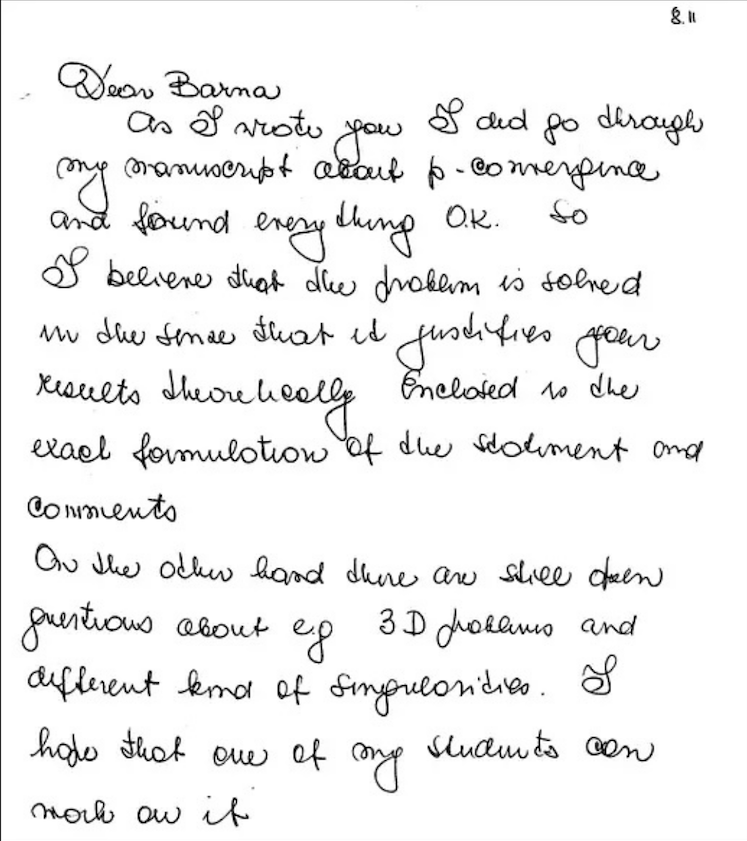
The Finite Element Circus: Where Ideas Take Center Stage

The Finite Element Circus is one of the most unique traditions in computational mathematics.
Introduced by Babuška and his colleagues in 1970, the Circus allowed the fast-moving field of numerical analysis to grow through a forum of open debate - anyone with ideas could present. Babuška served as the official "Ringmaster" from its inception until 1995. Even after stepping down, he remained the spiritual heart of the gathering.
The Circus continues today and includes a southern spin-off, the Finite Element Rodeo, created by Babuška when he joined the Oden Institute.